iRobot
Experience Strategy & Design / Creative Direction / Primary Research
Gaining new customers through social and device engagement
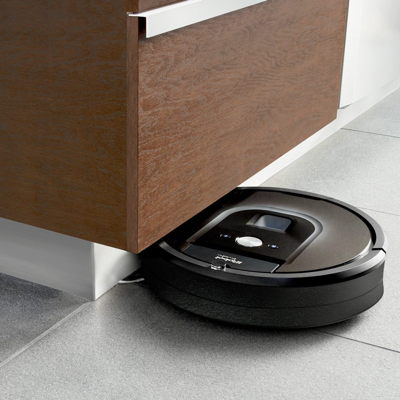
In 2016, Roomba was struggling to increase sales of the 900 series. The early adopter wave had ended and general consumers still expressed skepticism with robot vacuums due to high cost and quality concerns. The product was the first to feature a mobile app with basic controls for scheduling and basic maintenance and provided our team with a key opportunity to drive engagement and improve the product experience.
I led the agency engagement that identified, designed, and tested several features and worked with engineering, product, and marketing to roadmap their inclusion over a 2-year period. Today, many of the features are now featured across all their product lines.
The Challenge
Early adopters used the app once or twice, then disengaged—affecting overall product satisfaction and market growth–as it lacked featured that rewarded repeated use, offered personalization, or created emotional value.
The company needed a clearer understanding of how people lived with Roomba, not just how they operated it.
Social and earned media perpetuated consumer skepticism about vacuum performance.
Approach & Strategy
Customer Research & Insights
Conducted ethnographic in-home interviews, a remote usage survey, and moderated prototype testing across three key owner segments.
Mapped usage journeys and emotional drivers—identifying opportunities to move from utility to delight.
Uncovered pain points with setup, lack of feedback, and confusion around cleaning patterns.
Experience Design & Strategy
Explored interaction concepts focused on:
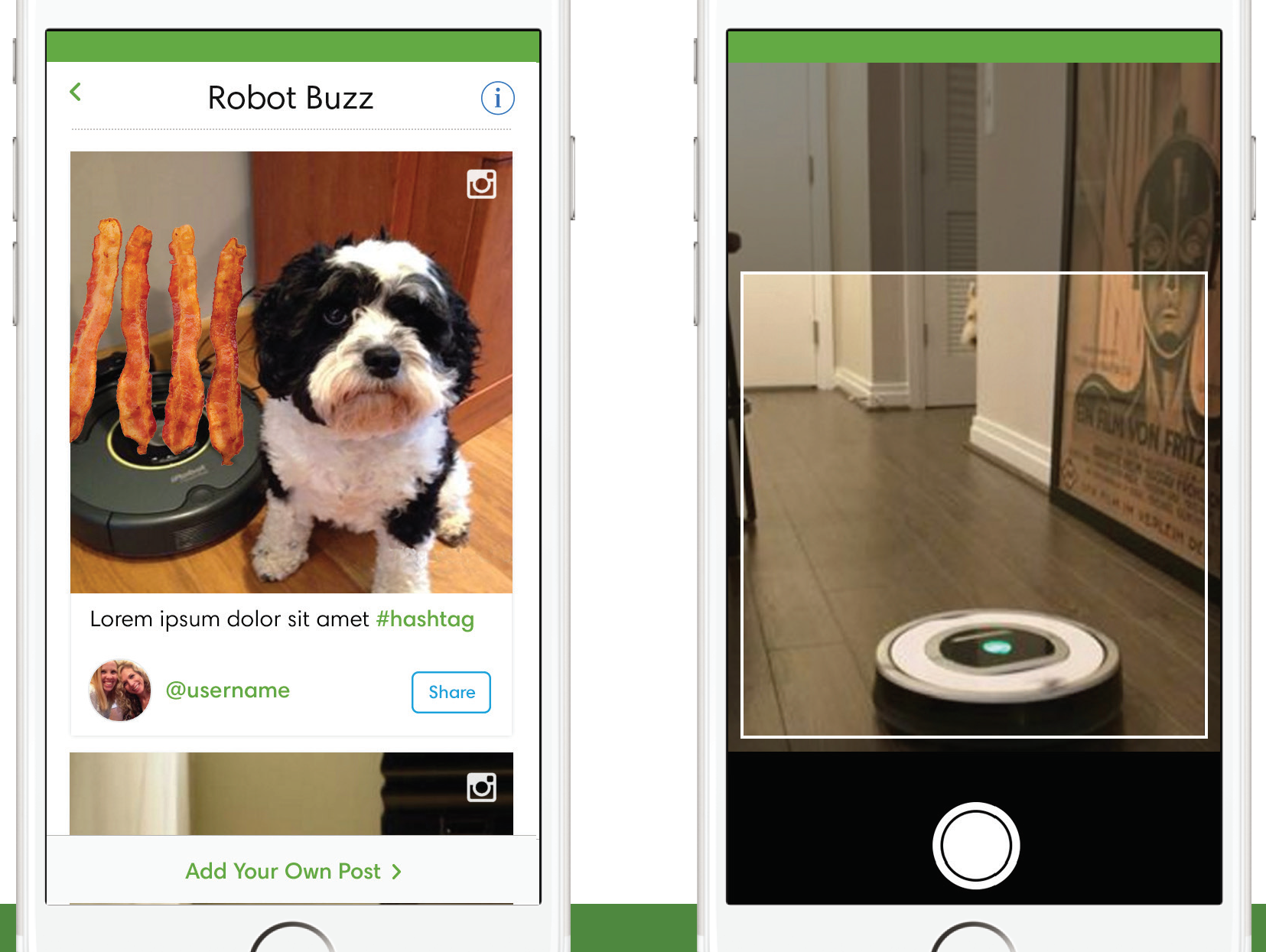
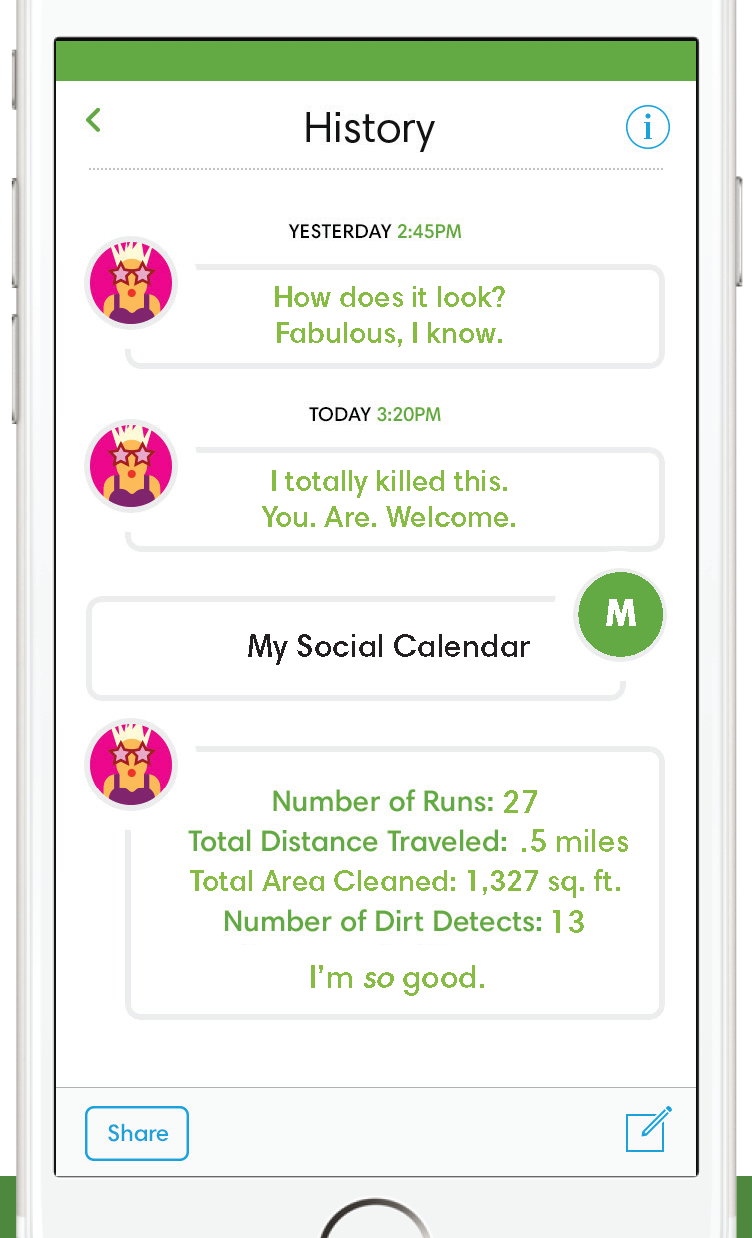
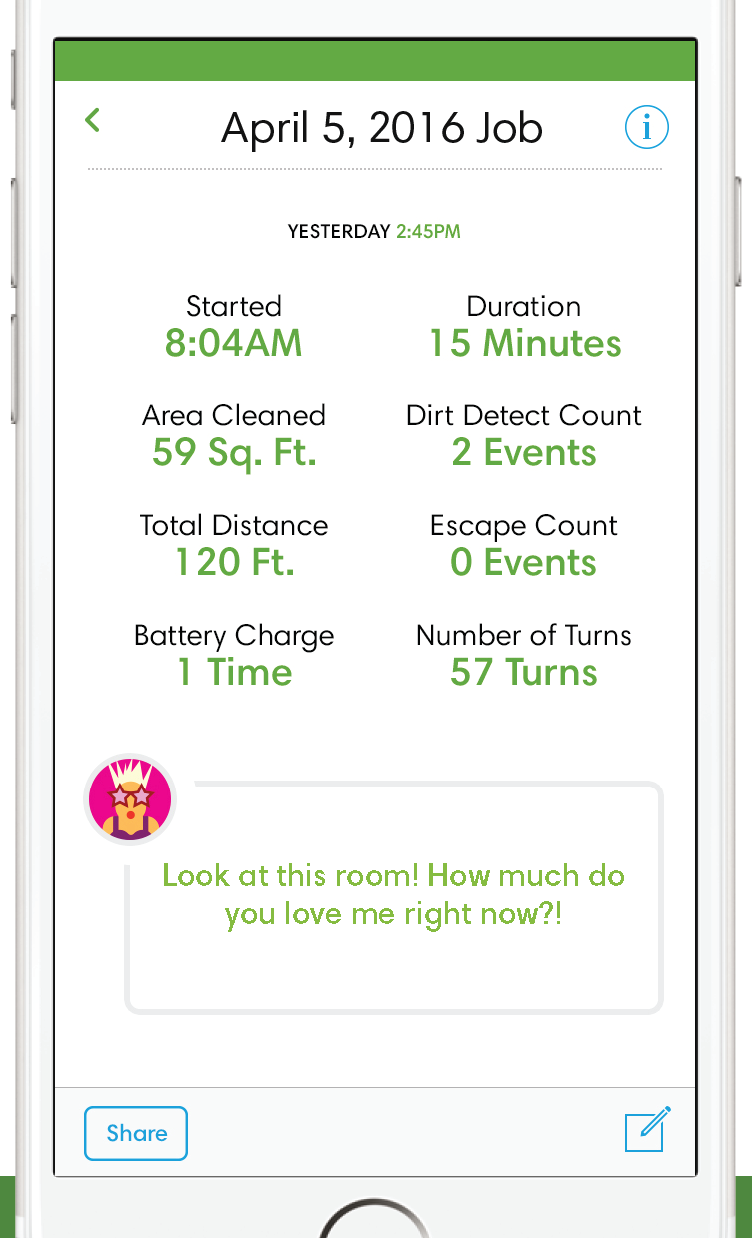
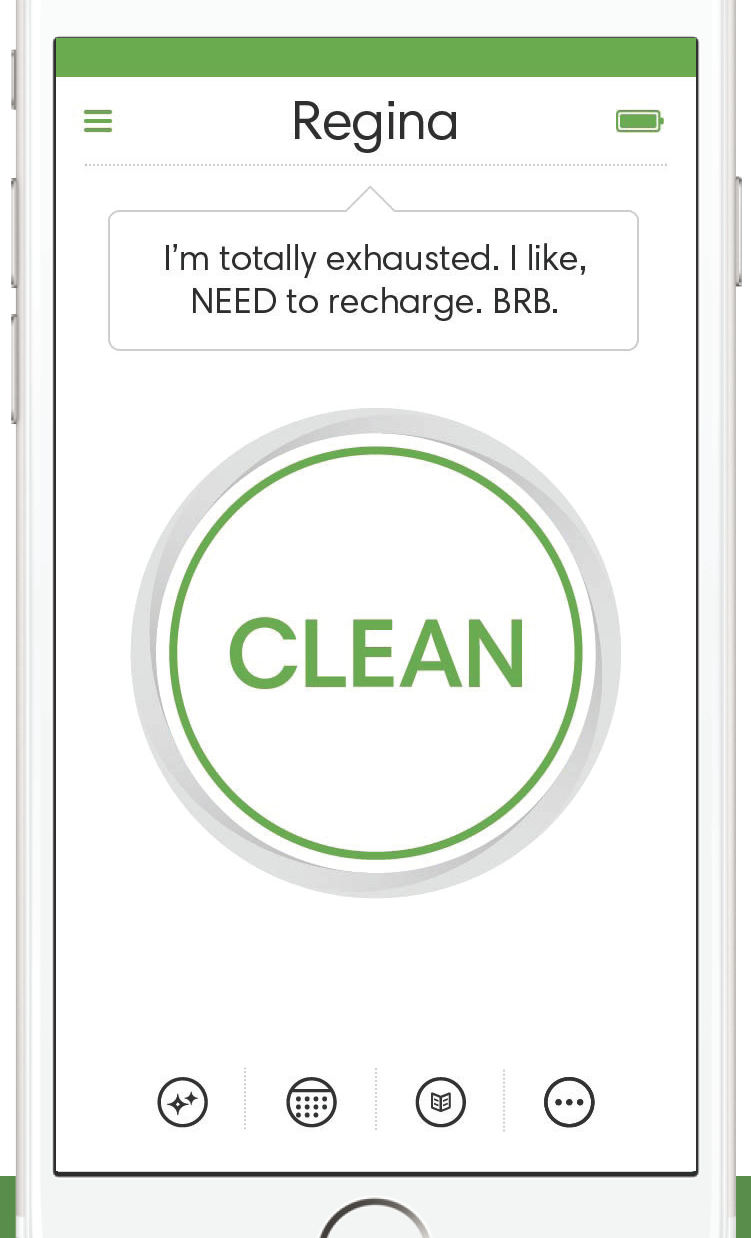
Personification (giving Roomba a “personality”)
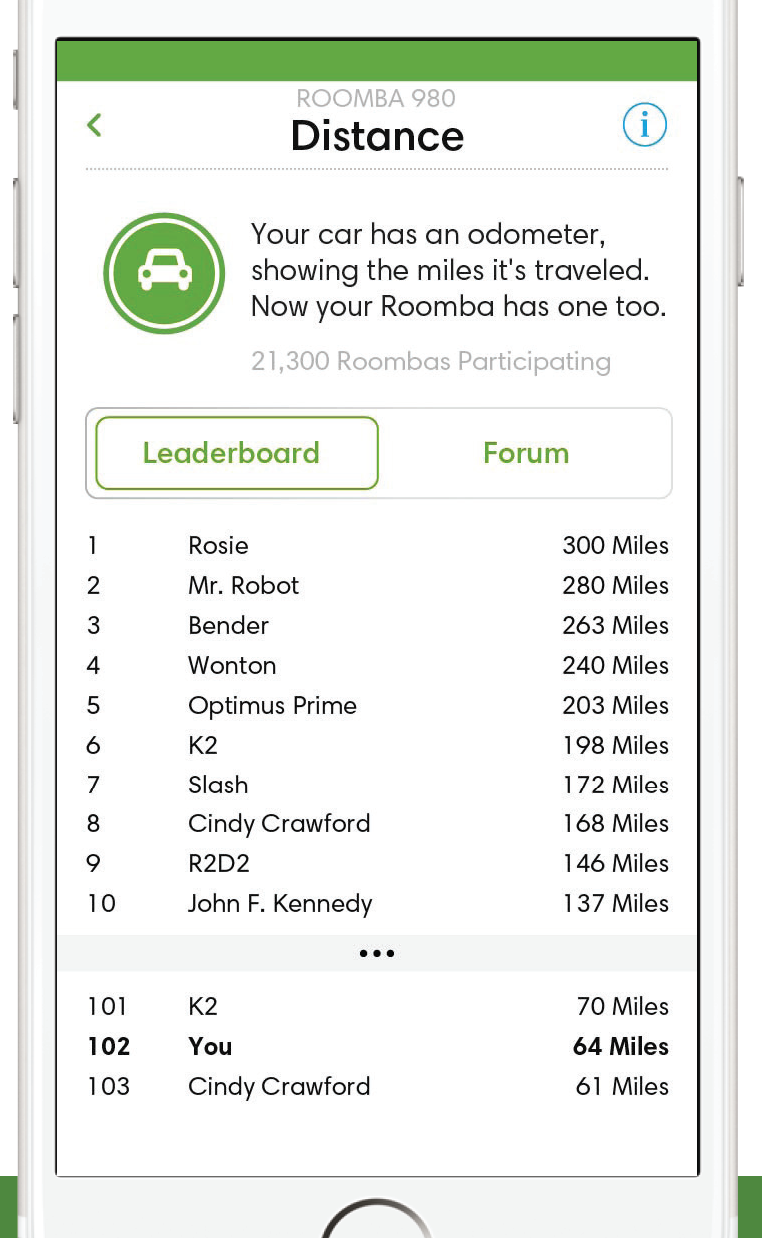
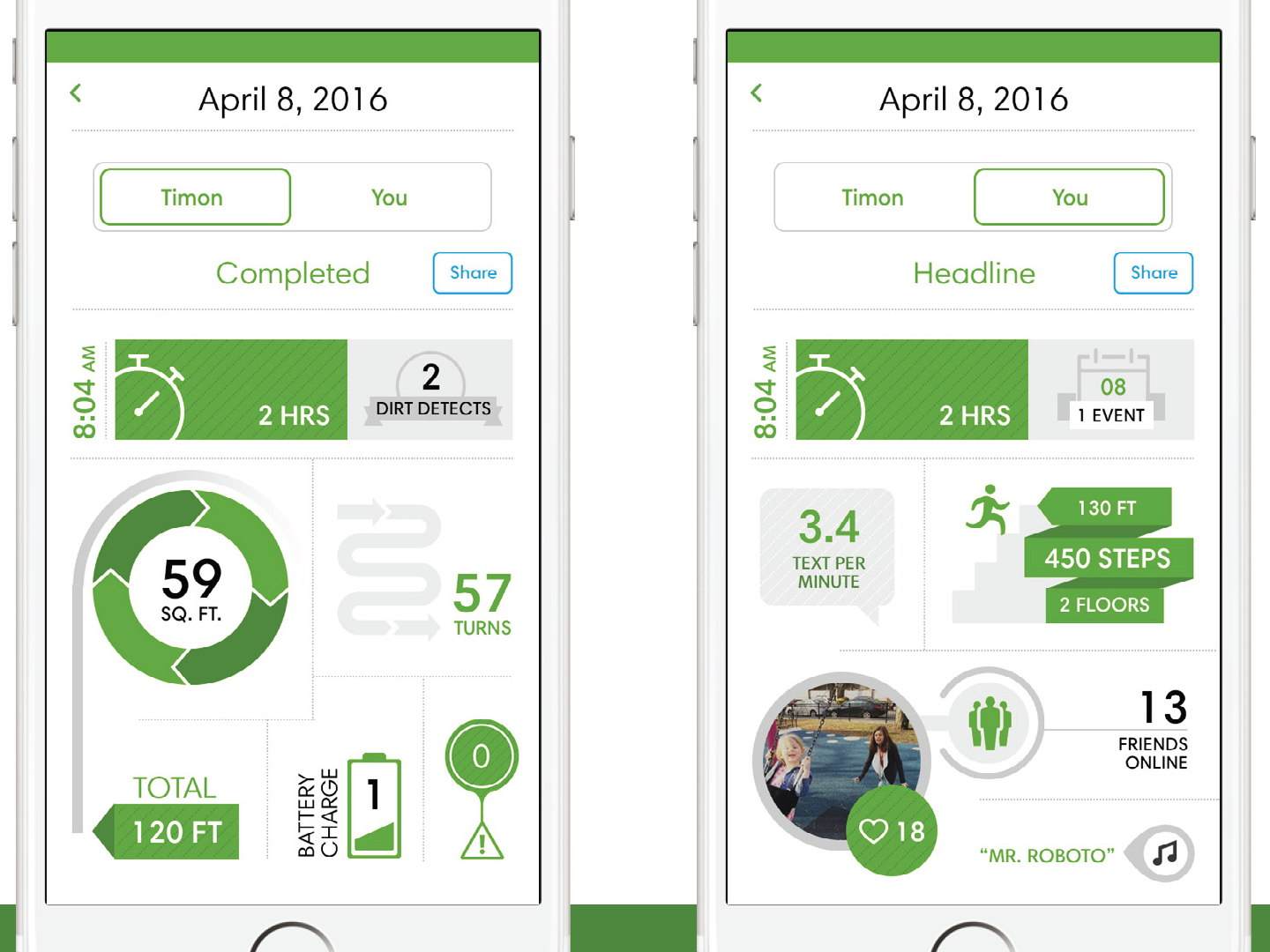
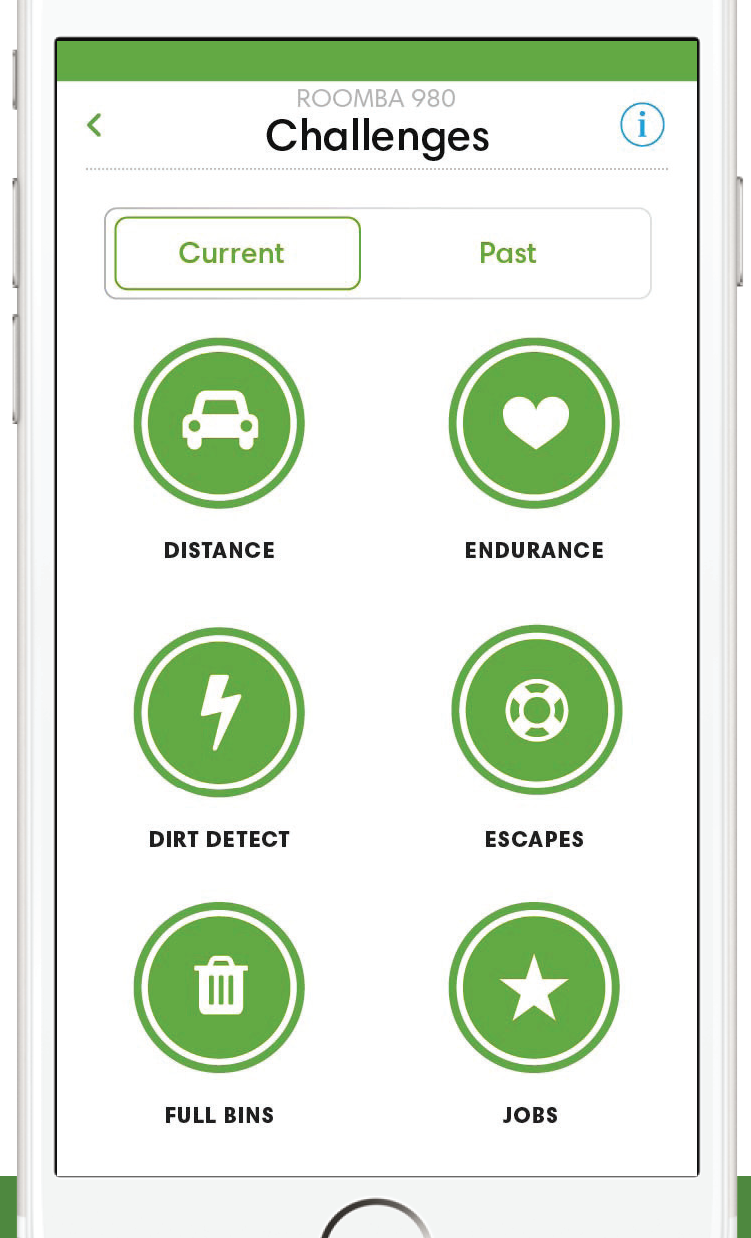
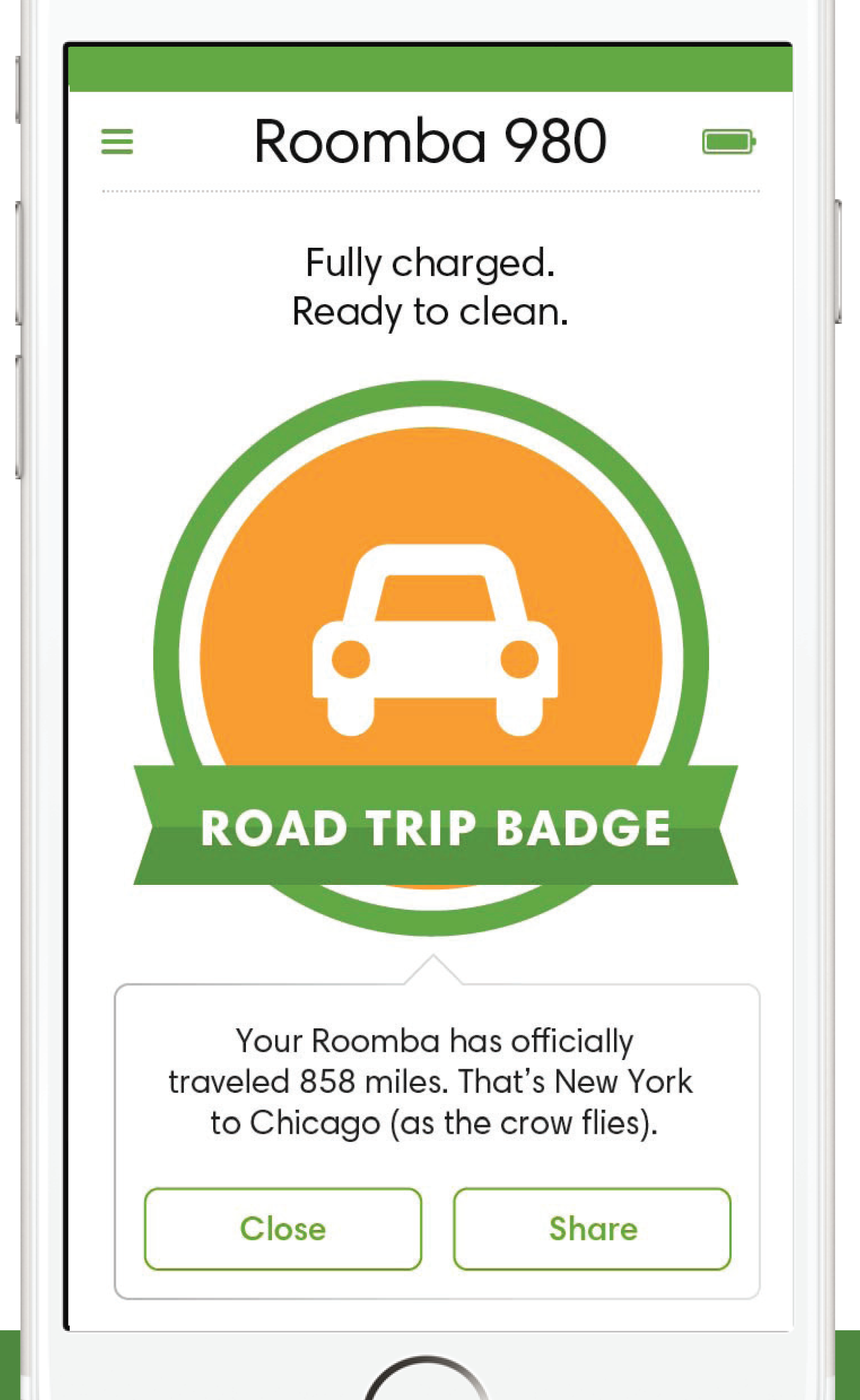
Gamification (reward loops, usage stats)
Visualization (home mapping, cleaning zones)
Designed surprise-and-delight micro-interactions—such as a celebratory animation after a full clean or Roomba “speaking” when stuck.
Protecting the brand and aligning to the monthly marketing production timelines.
Cross-functional Collaboration
Worked closely with product managers, engineers, and marketing to align feature concepts with the product roadmap.
Presented research findings and UX principles that informed the development of a smart mapping feature, later launched as a flagship capability.
Impact
Directly informed the development of features such as vSLAM (visual simultaneous localization and mapping), custom cleaning schedules, and area-based cleaning zones.
Helped reposition the app as a companion experience—not just a remote control—leading to longer engagement sessions and higher app ratings post-release.
Shaped the emotional tone of the product experience, contributing to Roomba’s ongoing differentiation in the crowded smart home category.
Enhancements contributed to ~$220M+ increase in annual revenue (2016 to 2017).